 Gut Microbiome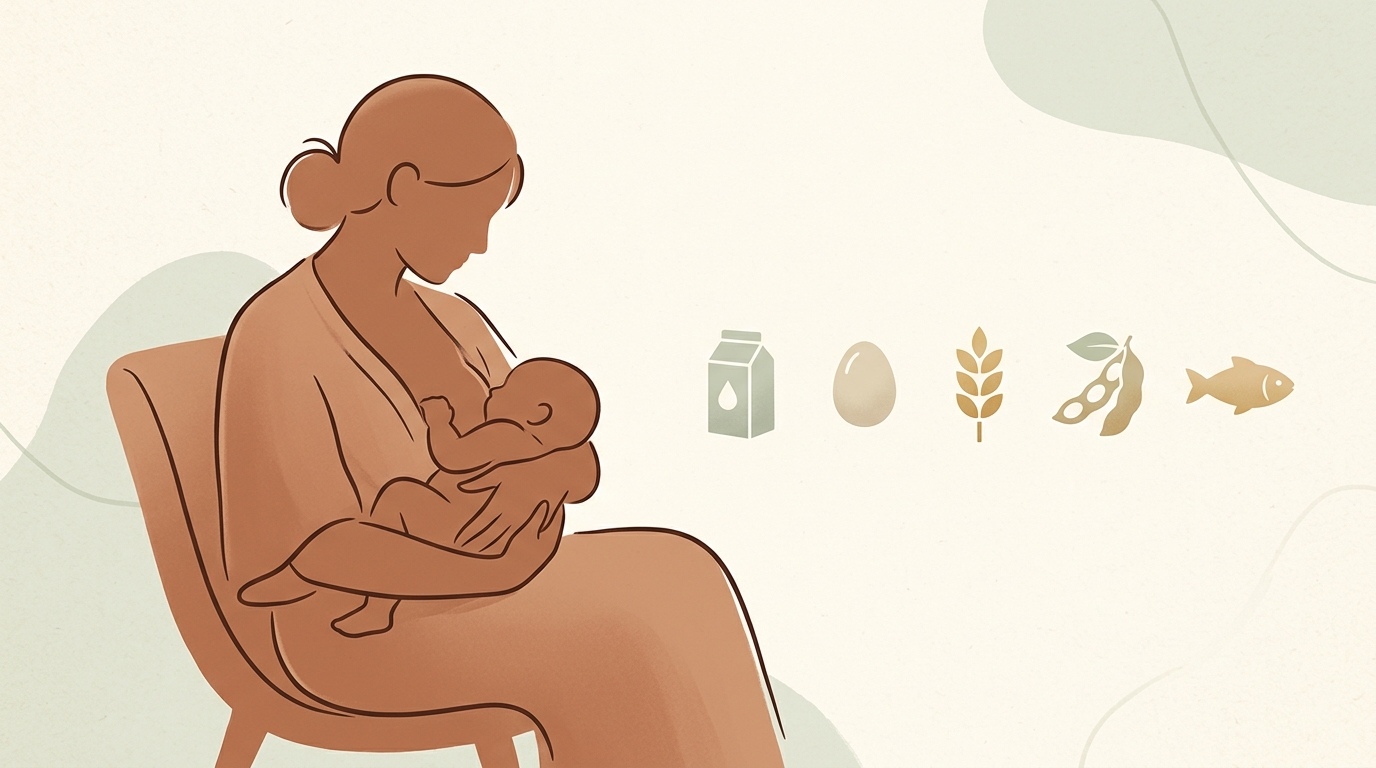
If you're breastfeeding and someone has suggested cutting dairy, it can sound like one more restrictive rule handed to an already exhausted person with no real evidence behind it. In this specific case, there's an actual randomized controlled trial, and it's worth knowing what it found before deciding whether to try it.
Hill and colleagues published a trial in Pediatrics in 2005 testing a low-allergen maternal diet, dairy, egg, wheat, soy, peanut, and fish removed, against a standard diet in mothers of colicky, breastfed infants. Of 107 infants enrolled (90 completed the trial), 74% of babies in the low-allergen diet group showed at least a 25% reduction in crying, compared to 37% in the control group.
The likely mechanism isn't "dairy causes gas" in the loose way it's often described. It's closer to a food-protein sensitivity: proteins from what a mother eats can pass into breast milk in small amounts, and in a subset of infants, that triggers an inflammatory gut response that shows up as colic-pattern crying.
A few things worth being direct about. This trial was conducted in breastfed infants specifically, the same caveat that applies to the gut-microbiome research covered in Probiotics for Colic and Breastfeeding and Colic. It's not a universal fix, 26% of babies in the elimination group didn't show that level of improvement, which fits with gut microbiome imbalance being one of three possible root causes, not the only one. And a full elimination diet is a real commitment; most parents trying this start with dairy alone, since it's the most commonly implicated trigger, before considering a broader elimination.
If you're not sure whether gut, nervous system, or feeding mechanics is the more likely driver for your baby, the root-cause guide walks through all three, or the assessment below sorts it directly.
Not sure which of the three systems is driving your baby's crying? A 90-second assessment sorts that out and hands you straight into a guided, timed protocol for tonight.
Take the 90-second assessment