 Nervous System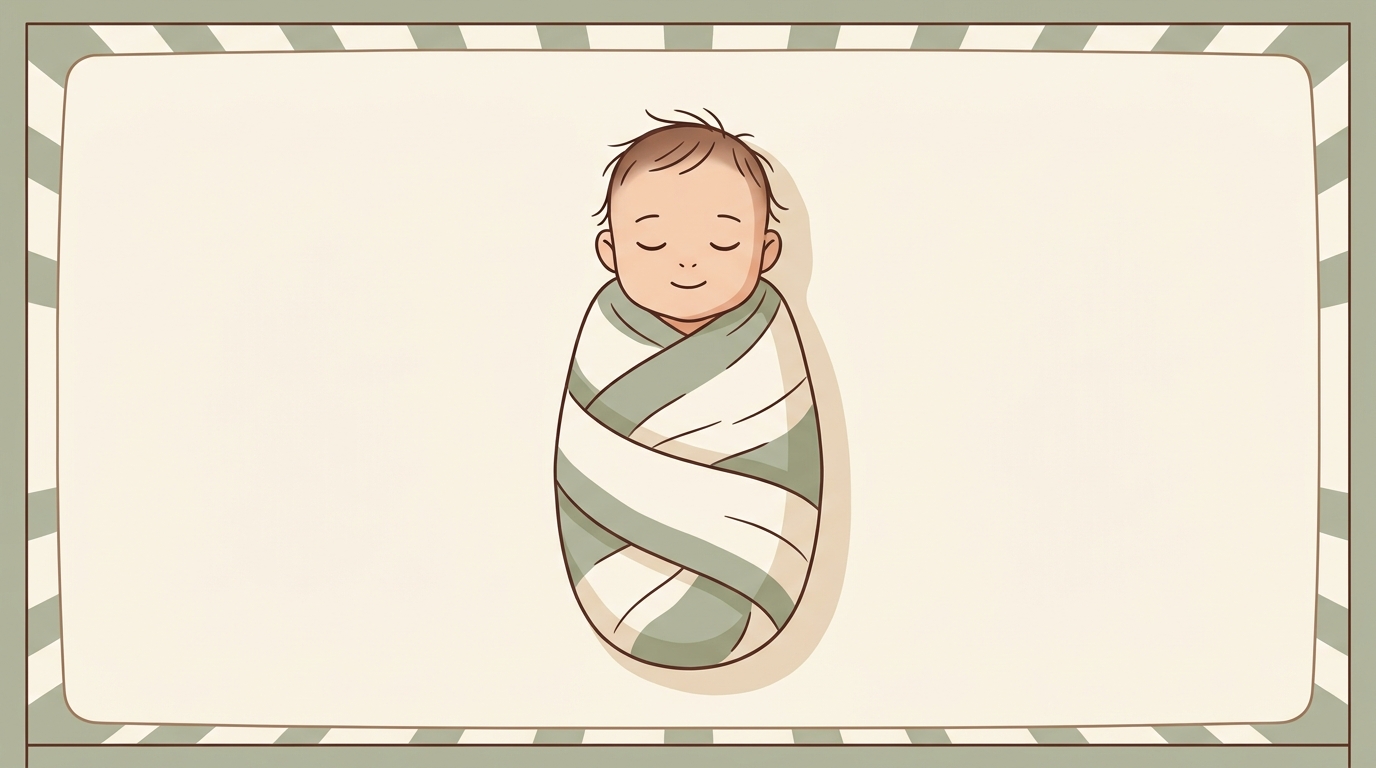
A newborn's startle reflex, the Moro reflex, fires from the arms: a sudden sensation triggers the arms to fling outward, which frequently wakes a baby who was just starting to settle. Swaddling contains that reflex, and there's real research behind why that matters.
Franco and colleagues (Pediatrics, 2005) studied swaddled versus unswaddled infants directly and found swaddled babies had higher sleep efficiency and a higher arousal threshold to external noise, meaning they were less likely to be jolted fully awake by a sound or their own startle reflex. A broader 2007 systematic review (van Sleuwen BE, et al., Pediatrics) reached a compatible conclusion across multiple studies: swaddling is associated with reduced crying and improved sleep.
Here's the part that has to run alongside that finding, not as a footnote: a 2016 meta-analysis (Pease AS, et al., Pediatrics) found that swaddling combined with prone (stomach) or side sleep positioning significantly increases the risk of sudden infant death syndrome, and the risk is highest for babies who are developmentally able to roll over while swaddled.
- Always place a swaddled baby on their back to sleep, on a firm, flat surface, every single time
- Stop swaddling as soon as your baby shows any sign of being able to roll, typically somewhere between two and four months
- This safe-sleep rule applies during actual sleep specifically; swaddling for daytime holding and soothing is a separate context
What that means in practice: swaddling should only be used with a baby placed on their back to sleep, on a firm, flat surface, every time, and swaddling should stop as soon as a baby shows any sign of being able to roll. This isn't a minor caveat to the sleep-benefit research. It's an equally weighted part of the same evidence, and skipping it to keep a post shorter would be a real disservice.
Swaddling addresses Nervous System Dysregulation specifically, by containing the startle reflex rather than treating gut inflammation or feeding-related air intake. If that's not the primary driver for your baby, see the root-cause guide, or pair swaddling with Tiger Hold for daytime soothing, since the safe-sleep rule above only applies during actual sleep, not while being held.
Not sure which of the three systems is driving your baby's crying? A 90-second assessment sorts that out and hands you straight into a guided, timed protocol for tonight.
Take the 90-second assessment