 Nervous System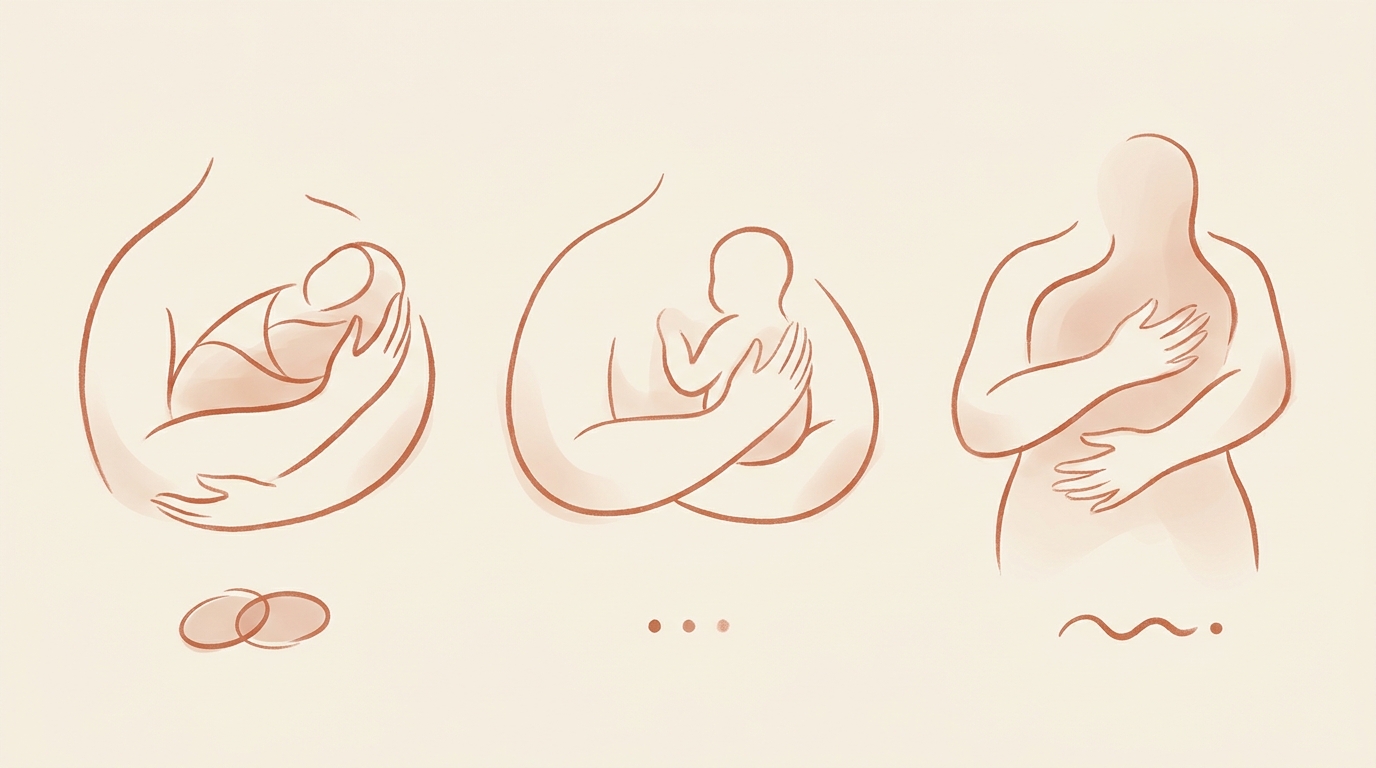
If you've read our Tiger Hold guide, you know the mechanism: face-down positioning with forward pressure on the abdomen, combined with a steady rhythm, addresses both mechanical gas movement and nervous system calming at once. It's not the only technique with real reasoning behind it, and it's not the right fit for every moment.
ILU Massage. Named for the shape it traces on a baby's stomach, an "I," an "L," and a "U," this is a structured abdominal massage sequence intended to help move trapped gas along the digestive tract. A 2017 randomized controlled trial (Nahidi F, Gazerani N, Yousefi P, Abadi AR, Iranian Journal of Nursing and Midwifery Research, n=100) compared infant massage directly against rocking and found massage produced significantly greater reductions in crying frequency, duration, and severity over one week. This is a technique for calmer moments, between crying episodes or as part of a wind-down routine, rather than mid-scream. Full stroke-by-stroke detail and the trial's caveats are in Gentle Infant Massage.
Upright hold with rhythmic patting. Simple, but frequently done wrong. Gas rises. A baby held fully upright, not semi-reclined, with the head resting on a shoulder and gentle rhythmic patting (roughly resting heart-rate pace, not aggressive jostling) gives trapped gas the clearest path out. This is closely related to correct burping technique, covered fully in Gentle Burping Techniques.
Worth being honest about the limits here, since it's easy for hands-on techniques to get oversold. A 2012 Cochrane review of manipulative therapies for infantile colic (Dobson D, et al.) found that across six trials, the measured benefit shrank substantially once studies with proper parental blinding were isolated. That review covered chiropractic-style manipulation specifically, not massage, but it's a useful reminder that hands-on techniques deserve the same evidence scrutiny as anything else on this site, not an automatic pass because they feel gentle and low-risk.
These techniques sit in the Nervous System Dysregulation system. If your baby's pattern points more toward gut or feeding mechanics, see the root-cause guide for what's likely to matter more.
Not sure which of the three systems is driving your baby's crying? A 90-second assessment sorts that out and hands you straight into a guided, timed protocol for tonight.
Take the 90-second assessment