Gut
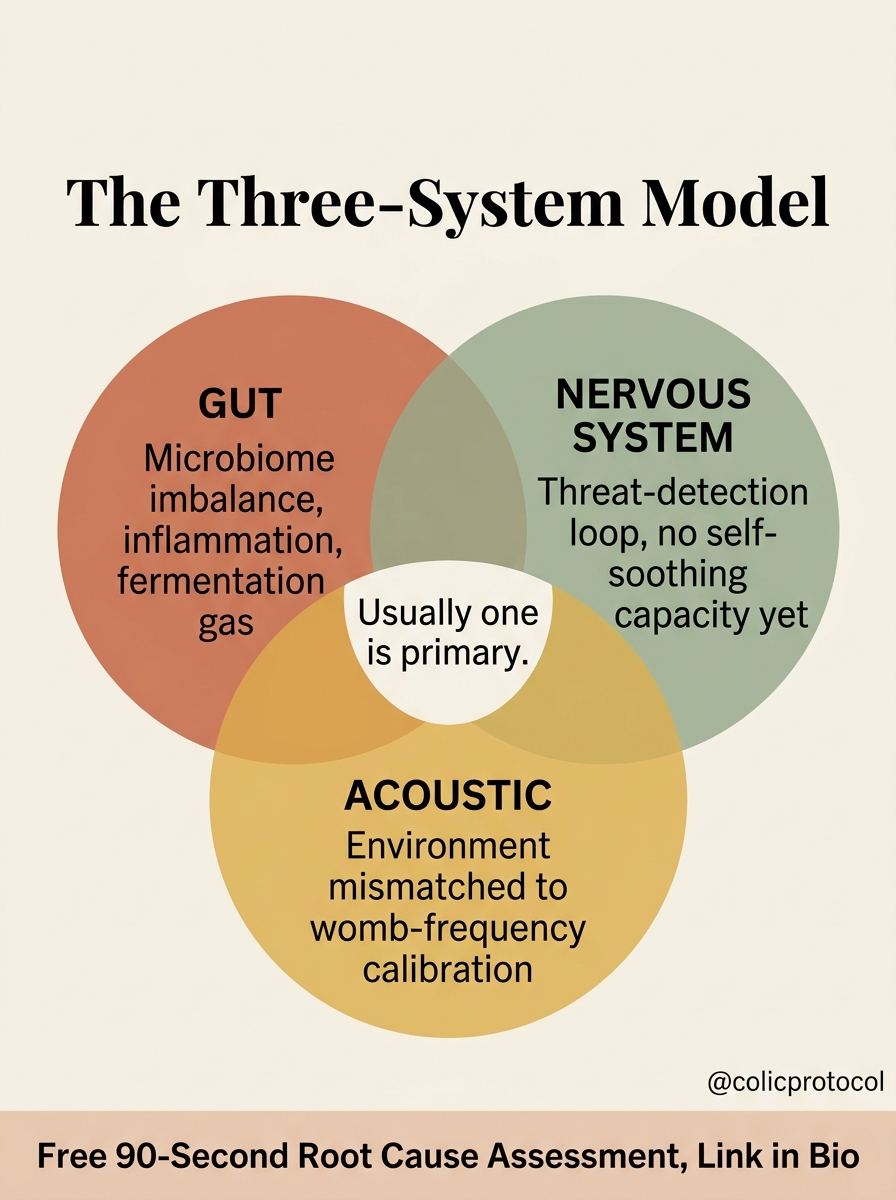
Microbiome imbalance and fermentation gas. Crying tends to build after feeds, alongside straining, arching, or visible discomfort passing gas. This is the system most colic products aim at, whether or not it's actually the one at play.
Gut microbiome imbalance, nervous system dysregulation, or acoustic overload: each one looks like "colic" from the outside, and each one needs a different first move. Most advice, and most products, guess. This tells you which one you're actually dealing with, before you spend another evening on a remedy that was never built for your baby's system.
Find My Baby's Root Cause →Free, no payment required · Result sent to your email · Takes about 90 seconds
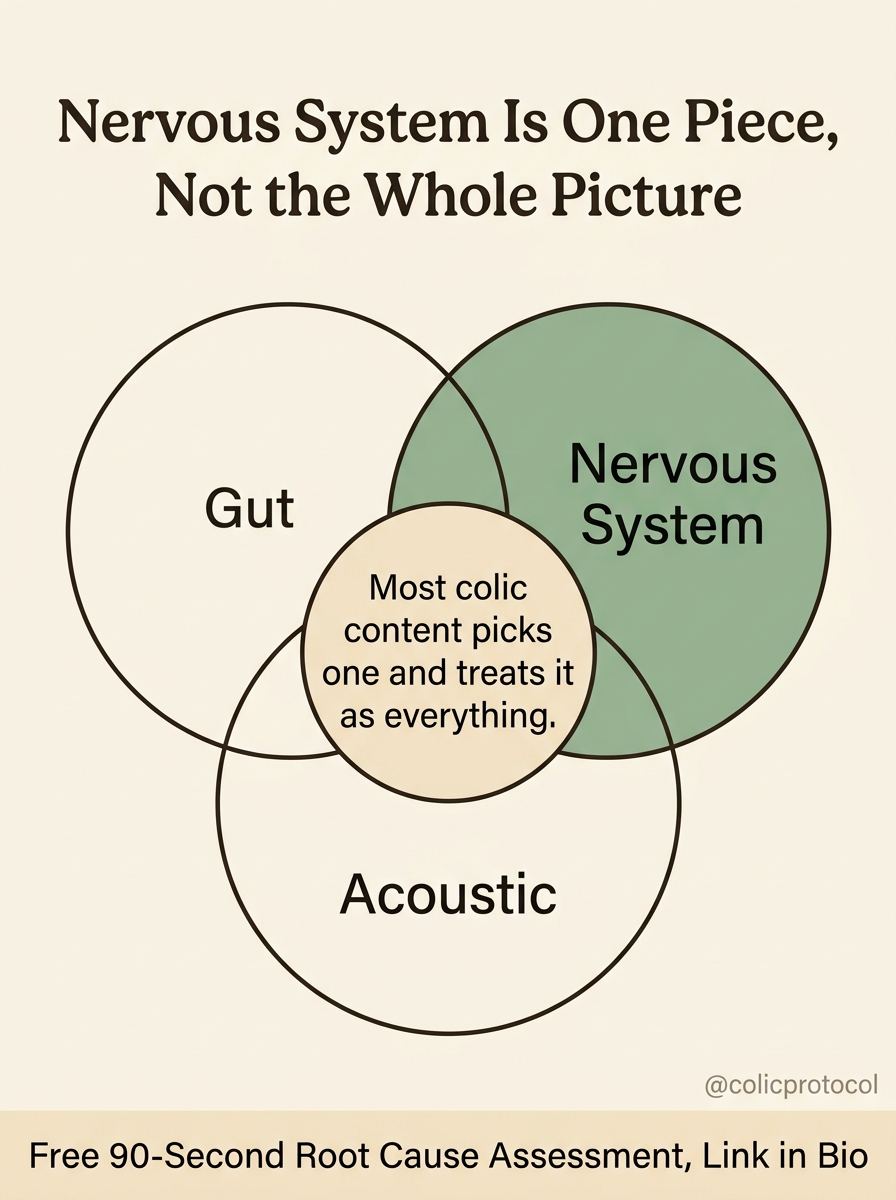
A hold that works because it calms a dysregulated nervous system will do very little for a baby whose primary issue is gut inflammation. A probiotic that fixes fermentation gas won't touch a baby who's simply overloaded by the wrong sound and light environment. Colic Protocol starts by identifying which of the three is actually driving your baby's crying, then hands you the specific first steps for that system, not a generic list of things that work for somebody else's baby.
Find your root cause →
None of this means you're doing something wrong. It usually means the advice was never diagnostic in the first place.
Gripe water has never passed a randomized controlled trial against placebo. Simethicone gas drops failed to show a statistically significant benefit in a Cochrane review. Both treat gas as the problem. For a baby whose primary system is nervous system dysregulation or acoustic overload, gas was never the actual driver, so neither product had a mechanism to work through.
Most colic does resolve with time, and reassurance that it will pass is honest. But "it will pass" doesn't tell you which of the three systems is active tonight, it just tells you to keep enduring one of them a little longer than you might need to.
The environment fix that settles an acoustic-overload baby does nothing for a baby whose issue is gut inflammation. Almost no piece of generic colic content tells you which baby it's actually written for. Yours might not be it.
Most babies have some overlap. Usually one system is primary, and that's the one worth addressing first.
Microbiome imbalance and fermentation gas. Crying tends to build after feeds, alongside straining, arching, or visible discomfort passing gas. This is the system most colic products aim at, whether or not it's actually the one at play.
A threat-detection loop that hasn't yet learned to self-soothe. Any change in handling, sound, or position can trigger a full reset of the crying, regardless of whether gas or feeding is involved at all.
An environment mismatched to womb-frequency calibration: the wrong sound, the wrong distance, too much light. These babies often settle fast in exactly the right setup, and unravel the moment it changes.
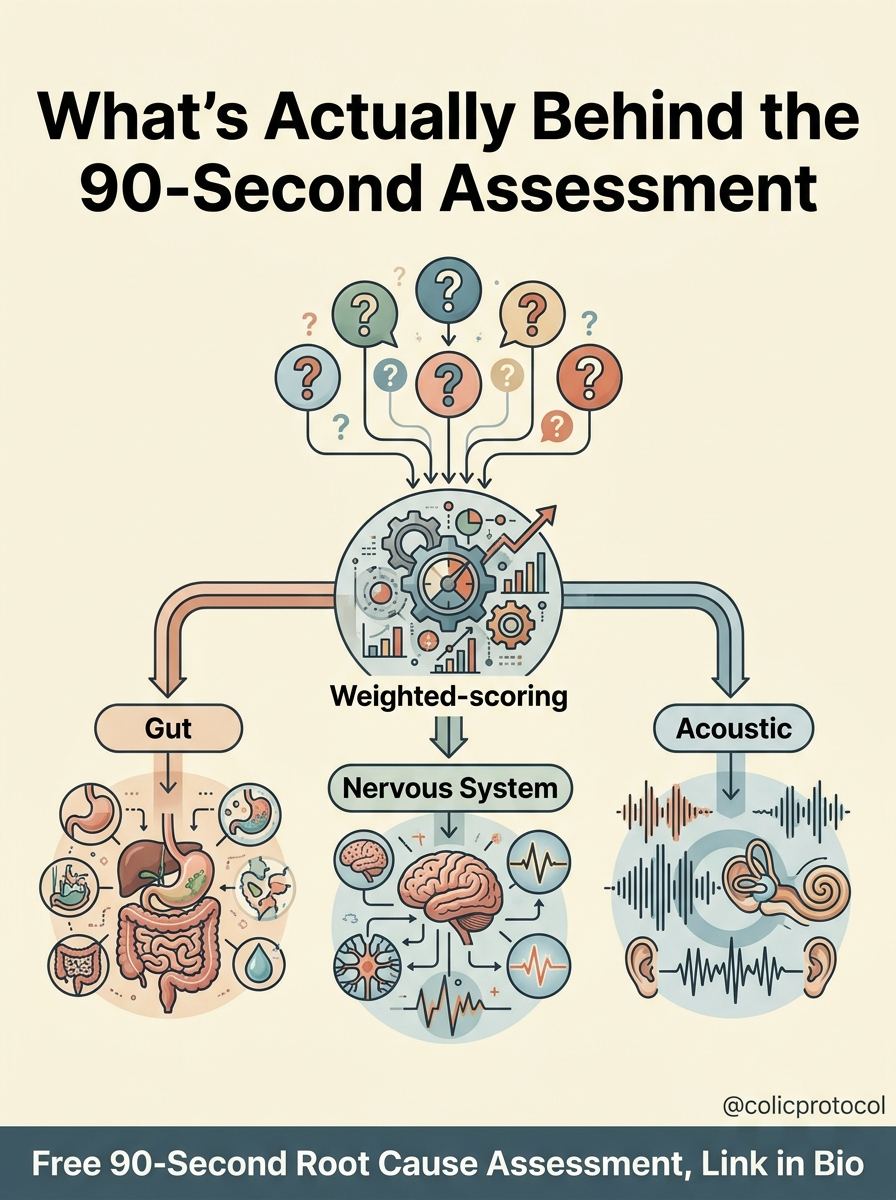
Answer a few questions about tonight, not a generic history.
Zion's colic started in her third week. Some evenings were three or four hours of crying that nothing seemed to touch. I heard the same reassurance most parents hear: it's normal, it will pass. It was true, and it didn't help at 2AM.
"So instead of trying one more product, I went back to the primary literature and read it the way I'm actually trained to: as an epidemiologist, not as a parent hoping something would stick."Within 48 hours of running a protocol built around Zion's actual primary system, not a generic one, our evenings changed. Colic Protocol is that same process, built so another parent doesn't have to spend weeks and a few hundred dollars finding it by trial and error.
About tonight's crying pattern specifically, not a long intake form. Weighted, not multiple choice trivia.
Gut, nervous system, or acoustic, scored from your actual answers, with a plain explanation of why.
Specific to your result. Free. Nothing in the free result requires a purchase to try tonight.
The Blueprint is there if you want the complete system. No pressure either way.
We'd rather you check these than take our word for it.
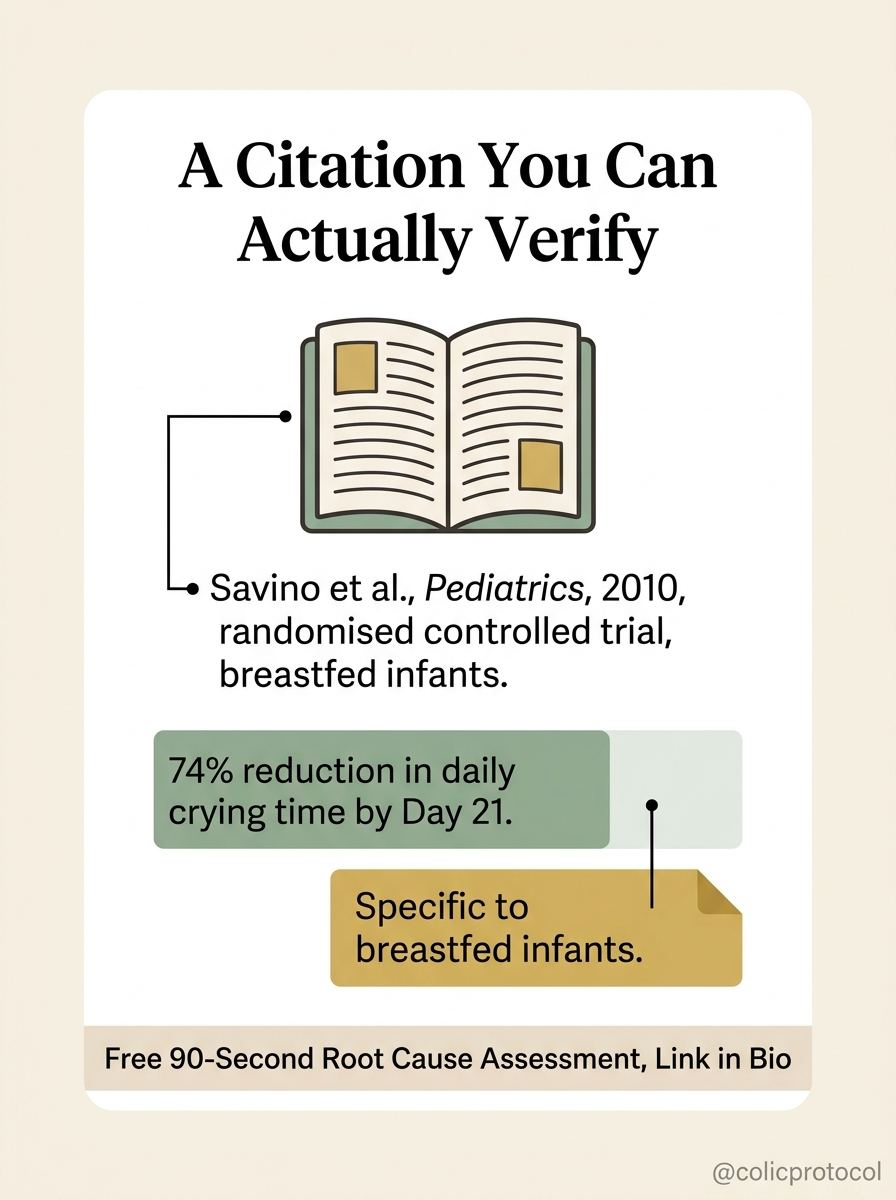
Randomized controlled trial reporting a 74% reduction in daily crying time by Day 21 using a specific L. reuteri strain. Conducted in breastfed infants specifically: if your baby is formula-fed or mixed-fed, this particular trial's population doesn't match yours, and the Blueprint's formula-feeding track uses different, broader evidence instead.
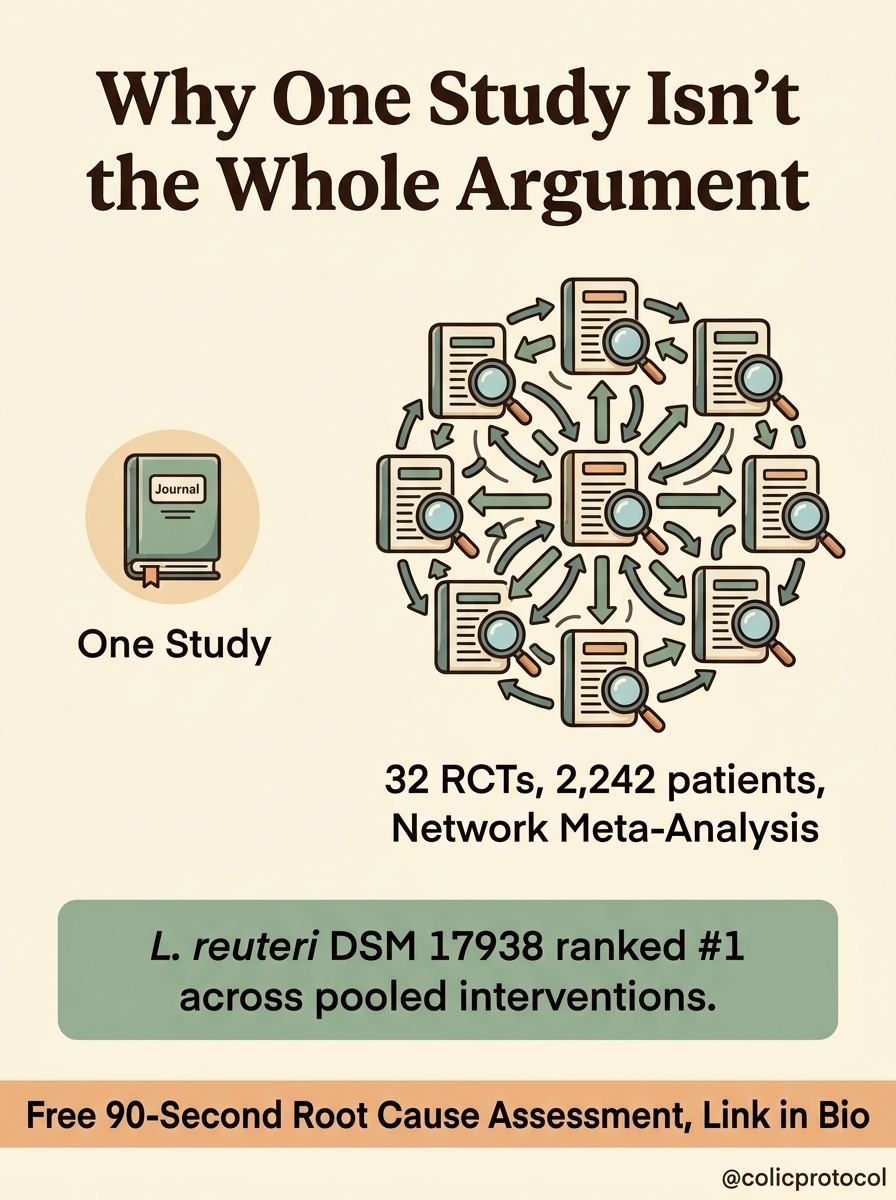
Comparing colic interventions head to head, this specific L. reuteri strain ranked first across the pooled trials. We name the strain publicly because the research is public. The exact dose and timing protocol calibrated by feeding method is inside the Blueprint.
Two independent systematic reviews reaching the same conclusion as Savino 2010, which is the part that matters more than any single trial: it's been replicated, not just published once.
The specific probiotic strain has real research behind it, and hiding which one would just make you search for it yourself, so we don't. The exact dose, timing, and how it's calibrated differently for breastfed versus formula-fed babies is the part that took the actual clinical reading to get right, and it's what's inside the Blueprint.
We'd rather show you one real story than fill this section with quotes we can't stand behind.
"I wish I came across your page five weeks ago. I could have just read your blueprint."
Cassie, mum of an 11-week-oldMore stories will be added here as they come in.
It's the two hours of sleep you didn't get last night. It's the version of yourself you expected to be by now, the one who had this figured out already. It's snapping at your partner over the monitor volume, and feeling guilty about it thirty seconds later. The money is the easy part to add up. Here's that part, at least.
Not a discount, not a sale. Just what the same $47 gets you instead.
If your baby isn't noticeably calmer within 72 hours of starting the parts of the protocol that match her primary system, email hello@colicprotocol.baby. You'll get a full refund. No form, no argument, no asking for the PDF back.
$47
One-time · instant download
Everything the assessment points toward, in full: the diagnostic protocol, the system-specific interventions, and the tools to track what's actually working.
Already know your system? Go straight to the Blueprint →
Whether you're breastfeeding, formula-feeding, or mixed matters here: the Blueprint includes a separate track for each.
5 questions. About 90 seconds. Your result, sent straight to your email.
Start the Free Assessment →No payment required · Instant result · Nothing else to buy to get it